
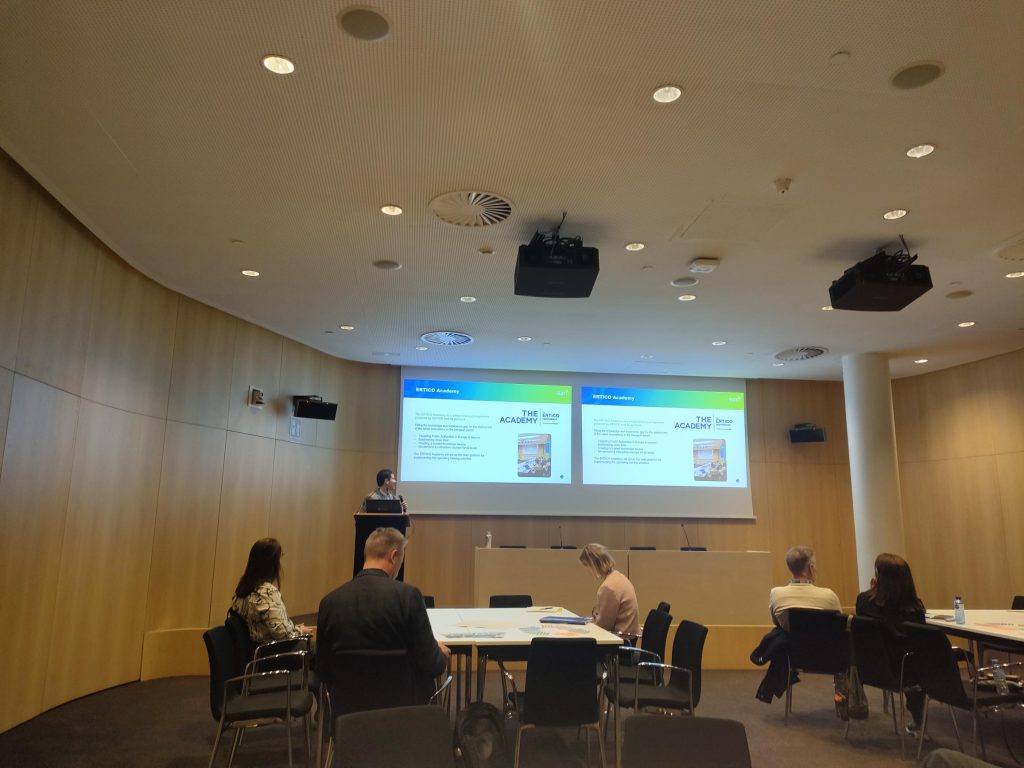
On 5 November 2025, the SUM hosted a dedicated workshop at Tomorrow Mobility World Congress, co-located with the Smart City Expo World Congress in Barcelona. The session brought together city representatives, transport authorities, researchers and European mobility stakeholders to explore how cooperative and co-created shared mobility business models can be systematically integrated into Sustainable Urban Mobility Plans (SUMPs).
A strategic setting for mobility planning dialogue
Tomorrow Mobility World Congress is a leading international event dedicated to urban mobility, transport innovation and sustainability, attracting cities, regions, industry actors and research organisations from across Europe and beyond. Embedded within the wider Smart City Expo ecosystem, it provides a unique space where strategic policy, technical solutions and real-world implementation converge. For the SUM, this context offered an opportunity not only to present project results, but also to validate them directly with practitioners, ensuring relevance for cities actively working on SUMP development or updates.
Bridging SUMP methodology and shared mobility practice
The workshop, titled “Integrating New Cooperative, Co-created Shared Mobility Business Models into SUMPs”, was designed as a highly interactive, three-hour working session combining expert inputs, city case studies and participatory discussion.
Following a welcome by representatives from project partneras POLIS and ERTICO, participants were guided through the SUMP planning logic, with a focus on identifying concrete entry points for shared mobility across the four main SUMP phases.
A dedicated session then showcased SUMP best practices from European cities, including:
Leuven (Belgium), highlighting integration at neighbourhood level;
Budapest (Hungary), presenting a metropolitan transport authority perspective;
Madrid (Spain), reflecting on governance and scale in a large urban context.
These examples illustrated how shared mobility is increasingly treated not as a stand-alone service, but as a strategic planning component aligned with accessibility, climate and public space objectives.
World Café: stress-testing integration across the SUMP cycle
The core of the workshop was a World Café session, explicitly designed to support the development and validation of SUM Deliverable 5.6 – “Guidelines for successful integration of new and shared modes into SUMPs”.
Participants worked in facilitated groups structured around the four SUMP planning phases: (Preparation and analysis, Strategy development, Measure planning and co-design and Implementation, monitoring and evaluation). Each group discussed practical integration questions, such as:
At which stages do cooperative shared mobility models add the most planning value?
What governance, data or regulatory barriers persist at local level?
How can cities ensure shared mobility supports — rather than competes with — public transport?
What conditions are needed to scale pilots into long-term planning measures?
The format encouraged peer exchange between cities, researchers and practitioners, allowing participants to compare planning realities across different national and institutional contexts. Discussions moved beyond abstract concepts, focusing instead on institutional capacity, sequencing of measures, stakeholder coordination and political feasibility.
Importantly, the insights gathered during this World Café were not treated as stand-alone reflections. They were systematically captured and integrated into Deliverable 5.6, directly informing:
the phase-by-phase integration guidance;
the identification of key planning activities;
and the framing of cooperative, co-created business model packages aligned with the SUMP methodology.
Key takeaways and next steps
Several cross-cutting messages emerged clearly from the workshop:
Shared mobility must be embedded early in the SUMP process, particularly during analysis and strategy development, rather than added at implementation stage.
Cooperation and co-creation — between cities, operators, public transport authorities and users — are critical to ensure long-term viability and public value.
Cities need practical, SUMP-compatible guidance to move from pilots to structured planning, especially regarding governance, data integration and monitoring.
Shared mobility performs best when planned as part of a package of measures, linked to public transport, mobility hubs, MaaS and complementary push and pull policies.
These conclusions reinforced the relevance of the SUM project’s approach and confirmed the usefulness of Deliverable 5.6 as a hands-on planning reference for cities and regions.
The workshop outcomes are fully reflected in Deliverable 5.6, which has been finalised and will be made publicly available on the SUM website following formal approval by the European Commission.

